
Tornado Safety: Formation & Classification
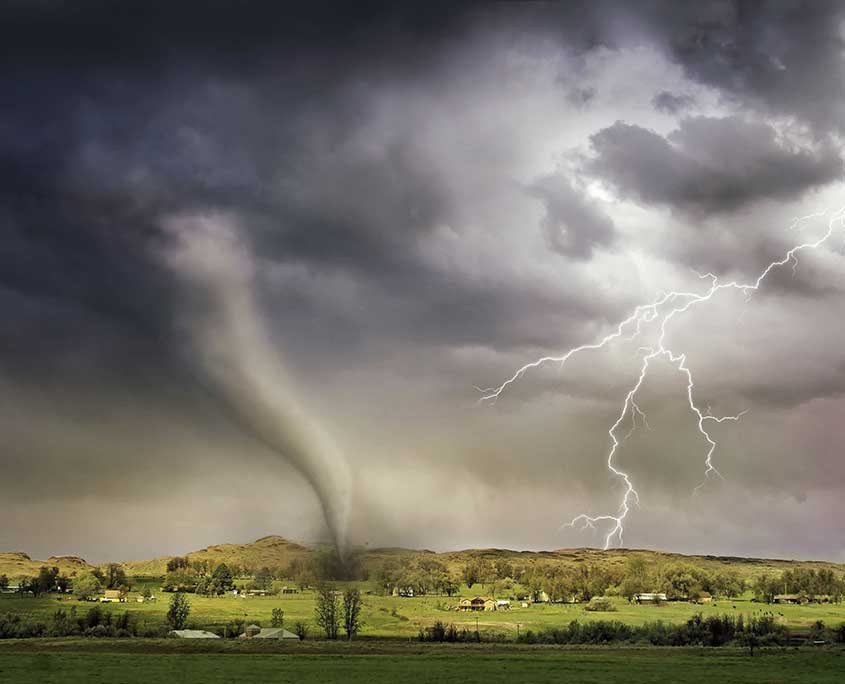
My very first encounter with a tornado was at a youth camp in 2001 near Red Deer, AB. I was approximately 15 years old. I remember all 100ish of us were evacuating camp up as the rain began to come down. We were driven to a nearby quonset (a long, round topped steel barn) where we all stood, waiting. We sang to pass the time, which kept us all calm and secure. After the storm passed, we went back to camp where things were strewn here and there. We counted our blessings, dried everything out that needed it, and continued on with camp!
I encourage you to learn these tips on tornado safety, from proactive planning to staying safe when the storm strikes.
Understanding Tornadoes:
Formation of Tornadoes:
Certain atmospheric conditions contribute to the formation of supercells within thunderstorms:
- Warm, Moist Air: Tornadoes emerge when warm, moist air at the surface clashes with cooler, drier air, creating atmospheric instability.
- Wind Shear: Involves changes in wind speed and direction with height creating a horizontal spinning effect within the storm.
- Updraft and Mesocyclone: In supercells, a powerful updraft of warm air rises rapidly, forming a rotating updraft known as a mesocyclone.
- Wall Cloud: As the mesocyclone intensifies, it produces a lowered and rotating cloud base called a wall cloud, a precursor to tornado formation.
- Tornado Funnel: Under favorable conditions, a rotating column of air descends from the wall cloud, forming a funnel cloud. This funnel cloud may or may not reach the ground initially.
- Touchdown: When the funnel cloud makes contact with the ground, it becomes a tornado, manifesting as a rapidly rotating column in contact with both the cloud base and the Earth’s surface.
Classifications of Tornadoes:
Tornadoes are classified on the Enhanced Fujita (EF) scale, ranging from EF0 (weakest) to EF5 (strongest). The classification is based on estimated wind speeds and associated damage:
- EF0-EF1: Light to moderate damage.
- EF2-EF3: Significant damage with the potential for considerable destruction.
- EF4-EF5: Intense damage, capable of wiping out well-built houses and causing severe destruction.
Where In Canada Do They Happen?

The most tornado-prone areas (but not limited to) in Canada include:
- Southern Alberta: Tornadoes are more frequent in southern Alberta, especially in areas near Calgary and Lethbridge. The foothills and plains of southern Alberta provide the right atmospheric conditions for tornado formation.
- Southern Saskatchewan: Similar to Alberta, southern Saskatchewan experiences tornado activity, with regions around Regina and Moose Jaw being more susceptible. The flat prairie landscape contributes to the development of severe thunderstorms and tornadoes.
- Southern Manitoba: Tornadoes occur in southern Manitoba, particularly in areas near Winnipeg and the Red River Valley. The interaction of warm, moist air from the Gulf of Mexico with cooler air masses can create conditions favorable for tornadoes.
- Ontario: Southern Ontario, including the Greater Toronto Area, is also prone to tornadoes. The warm, moist air from the Great Lakes can contribute to the development of severe thunderstorms and tornadoes, although they are less common than in the Prairies.
Tornado Safety
- Create a Tornado Safety Plan: Develop a tornado safety plan for your household. Designate a safe room or storm safe location, establish emergency communication methods, and practice drills so everyone knows the plan. Confirm if your home insurance includes tornados.
- Stay Informed: Utilize weather monitoring tools and apps to stay informed about tornado warnings and watches.
- Monitor Warning Signs: Be vigilant for warning signs of an approaching tornado, including dark, greenish skies, large hail, and a sudden, intense wind. Pay attention to local weather forecasts and take immediate action when a tornado warning is issued.
- During a Tornado: When a tornado warning is issued, seek shelter immediately. If you’re in a mobile home or vehicle, abandon it and find a sturdy building or storm shelter. The safest suggested area in a home would be the lowest level, towards the center of the building: in a closet, under the stairs, or a windowless room.
- After the Tornado: Exercise caution when exiting your shelter after a tornado. Watch for downed power lines, debris, and potential hazards. Check on neighbors and offer assistance if needed. Follow local authorities’ instructions and stay informed about any ongoing risks.
Notable Canadian Tornados:
- Elie, Manitoba (June 22, 2007):
- An F5 tornado struck the community of Elie, Manitoba, making it one of the strongest tornadoes ever recorded in Canada. Fortunately, it largely affected open fields and caused minimal damage to structures.
- Regina, Saskatchewan (June 30, 1912):
- This tornado is one of the deadliest in Canadian history. It struck the city of Regina, causing significant destruction and resulting in 28 fatalities. The exact strength of the tornado is not precisely known due to limited historical data.
- Edmonton, Alberta (July 31, 1987):
- A series of tornadoes hit the city of Edmonton, Alberta, resulting in 27 fatalities and extensive damage. The most powerful tornado in the series was rated F4 on the Fujita scale.
- Barrie, Ontario (May 31, 1985):
- An F4 tornado struck the city of Barrie, causing substantial damage and resulting in eight fatalities. It remains one of the most destructive tornadoes in Ontario’s history.
- Pine Lake, Alberta (July 14, 2000):
- A series of tornadoes affected the Pine Lake area in Alberta. The most significant tornado in the outbreak was rated as an F3. It tragically resulted in twelve fatalities and numerous injuries
- Didsbury, Alberta (July 1, 2023):
-
- By this time the Fujita scale has been updated to the Enhanced Fujita scale, marking this tornado as an EF4, with wind speeds up to 275km/hr. This tornado damaged up to 14 homes, no deaths, and only a few minor injuries. Having gone through a farming community, multiple animals were killed.
Conclusion:
Tornado safety is a collective effort that begins with individual preparedness. By understanding tornado behavior, having a solid safety plan, and staying informed, you can enhance your resilience in the face of these powerful storms. Prioritize safety, and be ready to act decisively when tornadoes threaten your community. You may not live in a tornado specific zone, but as you travel you could find yourself in a situation where knowledge and preparation are your saving grace!

